
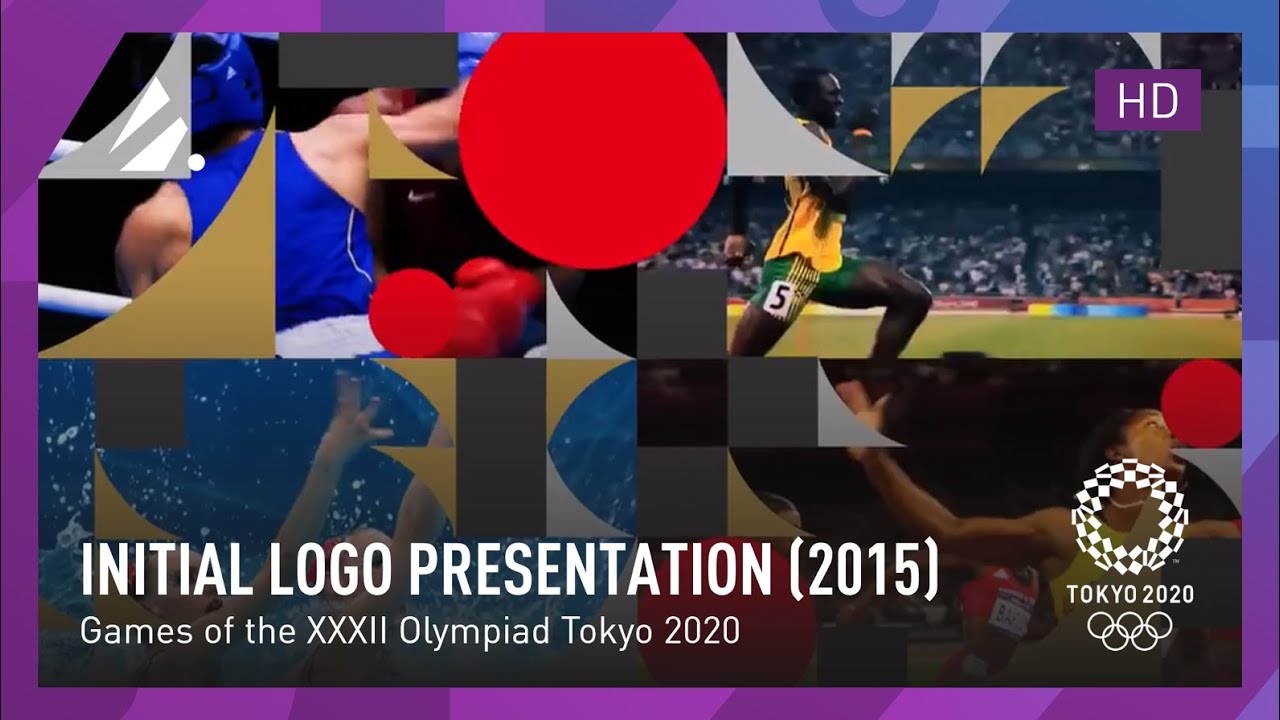
Copyright (c) 2015 Tokyo Organizing Committee for the Olympic Games
In 2020—or 2021 rather, the Summer Olympic Games have headed to the Japanese capital of Tokyo for the second time after 1964. Held from 23 July to 8 August, this was the first time in its history that the Games have been postponed and rescheduled to one year, rather than cancelled as a result of the then-ongoing COVID-19 pandemic. Despite being rescheduled for 2021, it retained the ‘Tokyo 2020′ name for marketing and branding purposes.
Ever since the city was named hosts of the 2020 Games in 2013, the path to staging the Tokyo Olympics has been turbulent and far from smooth, from costs and scandals surrounding the Games’ organizing committee, to a historic coronavirus postponement and summer heat fears, and especially unprecedented restrictions on spectators. At the time when Tokyo was announced as host city, Japan is reeling from a devastating earthquake and tsunami, and a nuclear meltdown in Fukushima in 2011, with the Tokyo Olympics being seen as a chance to rebuild, and sometimes, was being promoted as the “Recovery Olympics”. In addition, as a result of the then-ongoing health crisis, the Games were held behind closed doors, with no fans being permitted in venues, and it was due to a new state of emergency being recently declared in the Tokyo area at the time, which lasted from 12 July through 22 August.
More than 11,000 athletes have gathered to Tokyo for the rescheduled Olympics, which featured 339 events in 33 sports. It had also sought the introduction of brand new competitions including 3×3 basketball, freestyle BMX, and madison cycling, as well as further mixed events. It also had sought the debuts of karate, sport climbing, surfing, and skateboarding to the Olympic programme, as well as the return of baseball and softball for the first time since the Beijing Olympics in 2008.
The emblem for the Tokyo Olympics was supposed to be simplistic and shaped like a ‘T’, for ‘Tokyo’, ‘Tomorrow’, and ‘Team’. As black is the considered a combination of all colours, it is said that the central pillar represents tolerance and diversity regardless of race, nationality or religion.
Designed by Kenjiro Sano, it was unveiled at an event at the Tokyo Metropolitan Government Citizen’s Plaza on 24 July 2015, just five years before what would have been the opening ceremony of the 2020 Olympics. His design was chosen from 104 submissions from across Japan, but reactions to the logos were mixed; some praised its simplicity and symbolism, while others called it bland and deemed it unfit for a sporting event. However, allegations arose that the emblem had plagiarized the logo of Théâtre de Liège, a Belgian performance arts studio.
The TOCOG continued to defend Sano’s work, but became inundated with pressure to pull the design after the plagiarism accusations. They had conceded that this emblem had become “a PR disaster”, and decided to retire it just over a month after it had been introduced. The emblem was officially scrapped on 2 September 2015, and the official website and social media channels reverted to using the bid emblem, designed by Ai Shimamine, until a new emblem could be selected in a Japan-wide design contest. Finally in April 2016, picked from nearly 15,000 submissions received, it was announced that the winner of the contest was the “Harmonized chequered emblem” design; comprised of 45 boxes arranged to a wreath shape, which was created by Asao Tokolo.
JP2021.COM