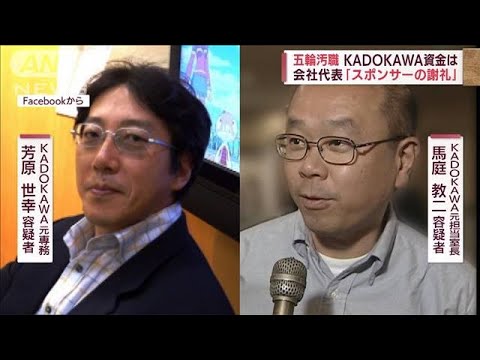
It turned out that the company representative who was arrested along with the former director in a corruption case surrounding the Tokyo Olympics told people about the funds transferred from KADOKAWA, “I thought it was a reward for being a sponsor.” According to people involved, Haruyuki Takahashi (78) is denying suspicion of accepting a bribe of about 76 million yen from “KADOKAWA”. Suspect Haruyuki Takahashi (in response to interrogation): “I don’t remember him. I haven’t received any money.” . Suspect Kazumasa Fukami (from interviews with people involved): “I thought the money I received was a reward for being able to sponsor the tournament.” It is said that they frequently traded at each other’s companies. The two were seniors and juniors at advertising giant Dentsu. The name of each consulting company is also “Commons” and “Commons 2”. By the way, according to the person concerned, the origin of the name seems to be the meaning of “becoming an advisor to many companies”. Fukami’s company “Commons 2” was originally a company where Takahashi was a director. Takahashi still owns 20% of Commons 2 shares. Commons 2 is also seen to have received money from the major advertising company “Ohiro”. Was Fukami’s Commons 2 used to fund Takahashi? However…. Suspect Kazumasa Fukami (from interviews with people involved): “Funds from KADOKAWA have not been passed to Suspect Takahashi.” KADOKAWA’s chairman talks about Fukami. That person (Fukami) was the head of Dentsu’s magazine department.The publishing world at the time was in a position where a magazine wouldn’t exist without asking that person.” The two people on the KADOKAWA side also have experience working with magazines. Former managing director Yoshiyuki Yoshihara (64) was the editor-in-chief of Recruit’s marriage information magazine “Zexy”, then moved to KADOKAWA and is now an advisor. In addition, the former head of the department, Kyoji Maniwa (63), was also the editor-in-chief of the town information magazine “Kansai Walker”. Their names are also listed in the official guidebook for the Tokyo Olympics produced by KADOKAWA. This time, the arrestees at KADOKAWA were two people in charge of practical work. Is there any difference from AOKI where the top chairman was arrested? Reporter Yohji Iwashita: “The difference between the AOKI case and the KADOKAWA case was that the former AOKI chairman was talking about receiving an actual solicitation. KADOKAWA’s former managing director Yoshihara suspects The Tokyo District Public Prosecutors Office’s Special Investigation Department believes that two people, including former senior managing director Yoshihara, were the ones who actually engaged in specific exchanges. What kind of development will the bribery case show in the future? News Department reporter Yohji Iwashita: “This time, various names have been raised about the companies involved in the selection of sponsors, and investigations are underway. The future issue will be the ‘statute of limitations’. The recipient (bribery) will be The statute of limitations is 5 years.The statute of limitations for the sending side (bribery) is 3 years.Considering the time when the sponsor was decided, there is a possibility that the problem of ‘statute of limitations’ will occur even if there is an illegal flow of money.In the future. The point is whether you can be charged with a crime over the ‘prescription’ issue.”
[テレ朝news] https://news.tv-asahi.co.jp

JP2021.COM