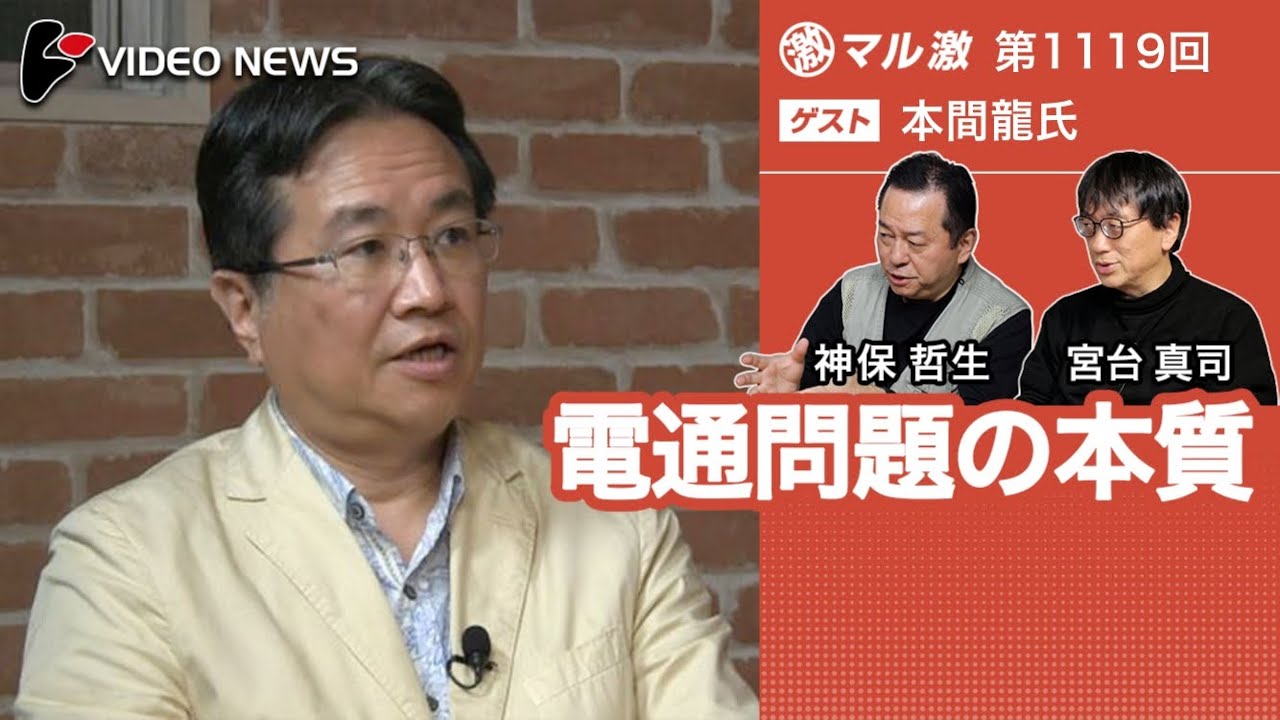
https://www.videonews.com/ Maru Geki Talk On Demand No. 1119 (September 17, 2022) Guest: Mr. Ryu Honma (Author) Moderator: Tetsuo Jinbo Shinji Miyadai Criticism has been gathering for some time. Dentsu finally got a female officer. On July 26, the Tokyo District Public Prosecutor’s Office launched a search of Dentsu’s headquarters in Shiodome, Minato-ku, Tokyo. The latest investigation is based on the issue that Haruyuki Takahashi, former director of the Tokyo Olympic and Paralympic Organizing Committee, received bribes from the sponsors of the Games. Many employees from Dentsu, which had an exclusive agency contract, were seconded to the organizing committee, so it is believed that this was part of the effort to collect evidence related to the selection of sponsors. Regarding Dentsu, in addition to a series of scandals such as the suicide of Ms. Matsuri Takahashi in 2015, the fact that it has made huge profits without subsidies such as sustainability benefits, minor points, cashless returns, etc. has been criticized. If it is true that Mr. Takahashi of Dentsu received bribes in return for giving preferential treatment to specific companies in the selection of sponsors for the Tokyo Olympics, he has used his overwhelming market share in the advertising industry as a weapon to single-handedly control the media. For Dentsu, which has been in control, it could be a fatal blow. Why has Dentsu become such a powerful company? Mr. Ryu Honma, a former Hakuhodo graduate who is well versed in the advertising industry, has a fierce sales stance represented by Dentsu’s Oni Jusoku, as well as connections in the sports and entertainment worlds, in addition to politics, government, and entertainment. He points out that dominance is the source of Dentsu’s strength. On the other hand, however, its strength has made it difficult for labor unions and other internal checks and external checks by the media to lead to a lack of labor management and compliance. I can’t help but think that the reason why a company as big as Dentsu continues to cause scandals is because it clearly doesn’t have the minimum checking function as a company. Dentsu, which has risen to the top by dominating the four media advertising markets of newspapers, television, radio, and magazines, is taking the lead in the Internet market, which is becoming the leader of the media world in place of television. I haven’t been able to. In fact, Denpaku (Dentsu and Hakuhodo) still occupy the 1st and 2nd positions in the current advertising industry hierarchy, but CyberAgent, which specializes in Internet advertisements, has risen to the 3rd place, catching up Denpaku. is doing. Ad spending on the Internet as a whole has already surpassed that of television, and some say it is only a matter of time before Dentsu’s dominance over the media ends. Why did Dentsu control the media and have the power to select sponsors for huge events such as the Olympics? On the other hand, why is there no end to scandals at Dentsu? Mr. Homma, who once had a hard time with Dentsu at Hakuhodo and knows firsthand the fear and strength of Dentsu, had a discussion with journalist Tetsuo Jimbo and sociologist Shinji Miyadai.[Profile]Ryu Honma Writer Born in 1962 in Tokyo. Graduated from Dokkyo University Faculty of Law in 1985. After working at Pentel, he joined Hakuhodo in 1989. He retired in 2006. Incumbent since 2007. His publications include The Great Sins of the Tokyo Olympics: Government/Dentsu/Media/IOC and Black Volunteers. Shinji Miyadai Tokyo Metropolitan University Professor / Sociologist Born in 1959 in Sendai. He completed a doctoral course at the University of Tokyo Graduate School. He is a sociology doctor. After working as an associate professor at Tokyo Metropolitan University and an associate professor at Tokyo Metropolitan University, he assumed his current position. His specialty is social system theory. (My doctoral dissertation is “Anticipatory Theory of Power.”) His publications include “Difficulties in Japan”, “Sociology from the Age of 14”, “From Justice to Enjoyment: Film Reveals Modern Illusions”, and “Where Do We Come from?” Where are you going?” Tetsuo Jinbo Journalist/Representative of Videonews.com/Chief Editor Born in 1961 in Tokyo. 1987 Graduated from Columbia University Graduate School of Journalism. After working as a reporter for the Christian Science Monitor, the Associated Press, and other American media outlets, in 1999 he opened Videonews.com, an Internet broadcasting station specializing in news, and assumed the post of CEO. His publications include Landmine Report, Tuvalu: A Country Sinking in Global Warming, PC Remote Control Incident, Translated The End of Food, and DOPESICK The Opioid Crisis in America.[About Videonews.com]Videonews.com believes that a management base that does not rely on advertisements is essential for truly public reporting. Tax) is an Internet broadcasting station specializing in news operated by. (www.videonews.com) Shinji Miyadai

JP2021.COM