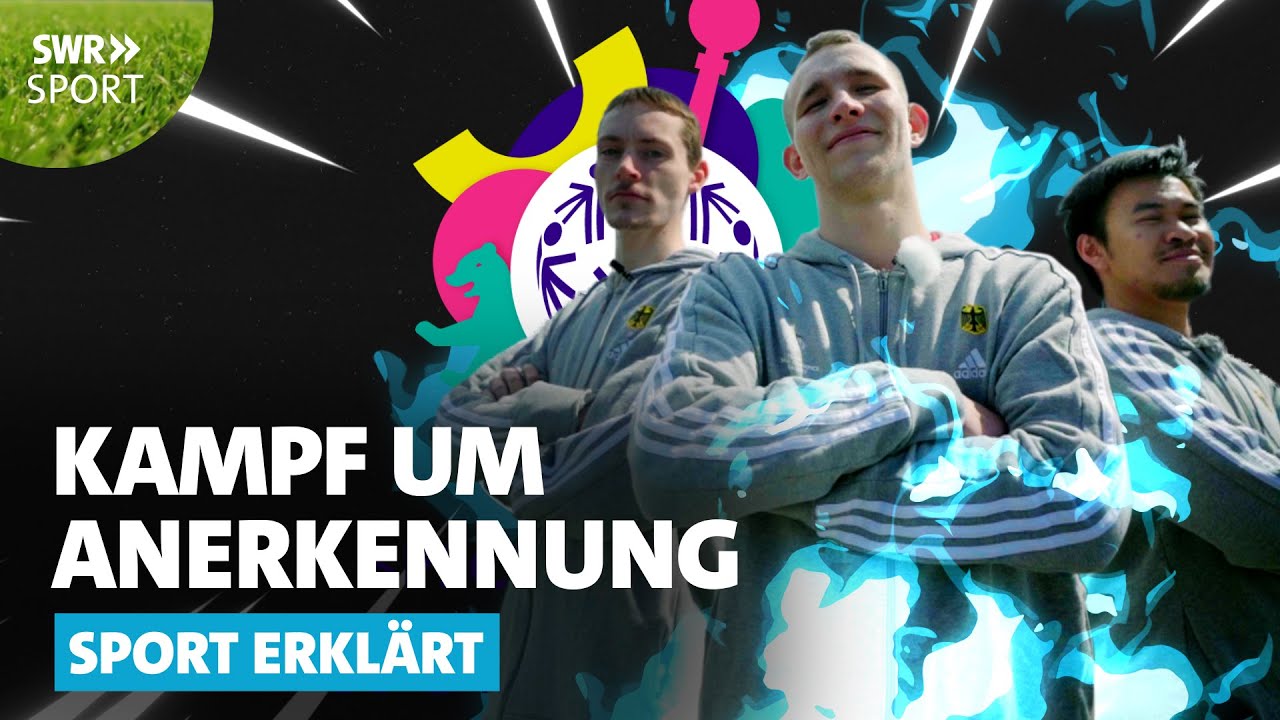
The Special Olympics World Games are among the largest sporting events in the world. You can find out what it’s all about in the new “Sport Explained”. Special Olympics is the world’s largest sports movement for people with intellectual disabilities and multiple disabilities. It is recognized by the International Olympic Committee. Eunice Kennedy-Shriver, sister of US President John F. Kennedy , launched the movement in 1968. Kennedy-Shriver wanted to give people with intellectual disabilities the opportunity to do sports. This also applies to her sister Rosemary. Up until then, there had been no competitions for her. The idea then, as now: experience through sport People with intellectual disabilities gain recognition, develop self-confidence – and take part in social life. The World Games now take place every two years. Summer and winter games alternate. The summer games will be in Berlin in 2023. The motto: #TogetherUnbeatable. The sports concept of Special Olympics Special Olympics competitions like the World Games should be fair and exciting and give as many athletes as possible the chance to be there at least once in their lives. Therefore, there are two important principles in the Special Olympics sports concept: the principle of advancement and the principle of classification. The principle of advancement ensures that the athletes are well prepared for the World Games – i.e. know the rules of their sport and get a feeling for how such a big sporting event works. It describes the individual levels that athletes have to climb to be able to take part in the World Games. First stage: train regularly, for example in a sports club, at school or in a workshop for people with disabilities. Second stage: participate in regional competitions. Third stage: take part in the National Games. For this, the athletes need a starting pass that states that they are fit for sports and have a mental disability. From here they can apply for the fourth stage: the World Games. Each stage serves as a preparation and qualification for the next one, so none of them can be skipped. Every athlete has the chance to master stage after stage. But of course places at the World Games are limited. Special Olympics Germany, i.e. the German organization of the movement, has a fixed number for each sport of how many athletes from Germany can take part. It’s not just about medals, it’s also about working together. At the World Games, for example, there are unified competitions. Athletes with and without intellectual disabilities compete against other teams. This mode brings people with and without intellectual disabilities together through sport. In everyday life, this often does not work. It is estimated that only one to two percent of people with intellectual disabilities living in Germany are active in sports clubs. The hope is that the athletes will get more attention through the World Games. That there will be more sporting opportunities for them in the future, in workshops and in sports clubs. Offers that enable them to participate more and more in social life. +++ Sport explained +++ The name says it all. “Sport Explained” provides answers to complex questions from the world of sports, illustrated by impressive graphics. The topics range from nutrition and science to finance and political issues. “Sport Explained” looks behind the scenes or into the archives to get to the bottom of exciting phenomena from the world of sports. There is more from SWR Sport here: SWR Sport on the web: https://www.swr.de/sport SWR Sport on Facebook: https://www.facebook.com/swrsport SWR Sport on Instagram: https://www .instagram.com/swrsport SWR Sport on Twitter: https://twittecom/swrsport

JP2021.COM